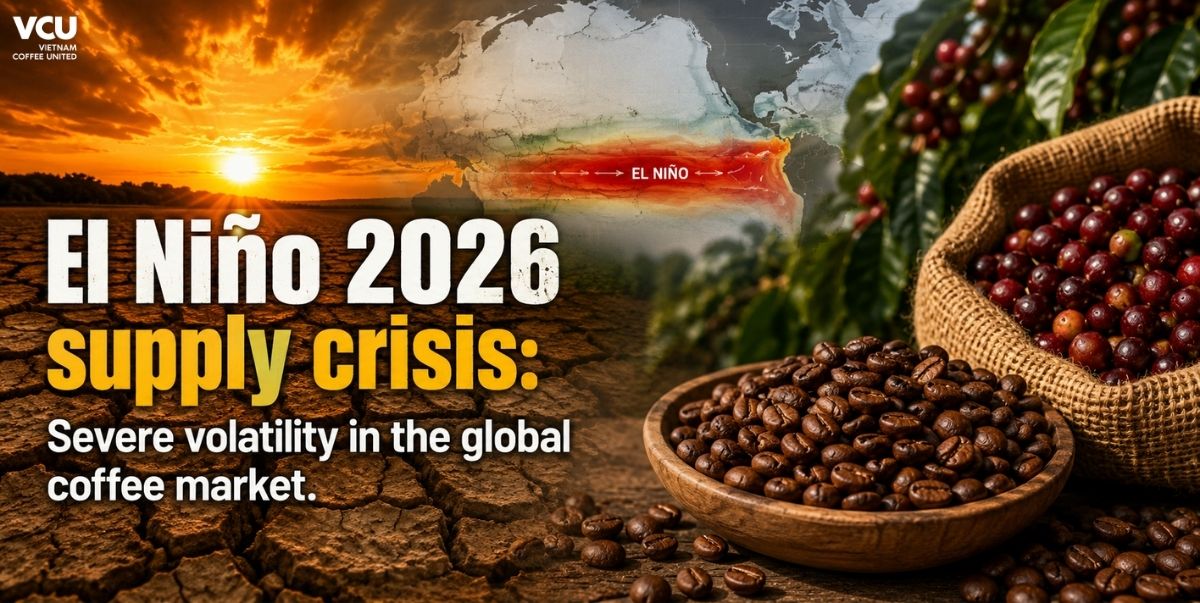
El Niño 2026 supply crisis: Severe volatility in the global coffee market
According to the latest reports from international meteorological organizations in early 2026, the probability of a strong El Niño event returning in 2026 is increasing significantly, with signs that it may persist into early 2027. This extreme climate phenomenon is not only a warning signal for global weather patterns, but also a direct trigger for severe volatility in the global coffee market. For Vietnam – the world’s largest Robusta exporter – this wave of extreme heat is placing the billion-dollar coffee industry under tremendous pressure, forcing international roasters and importers to urgently seek sustainable and highly self-reliant supply solutions such as the model developed by VCU.
El Niño 2026 poses a serious threat to Vietnam’s Robusta supply
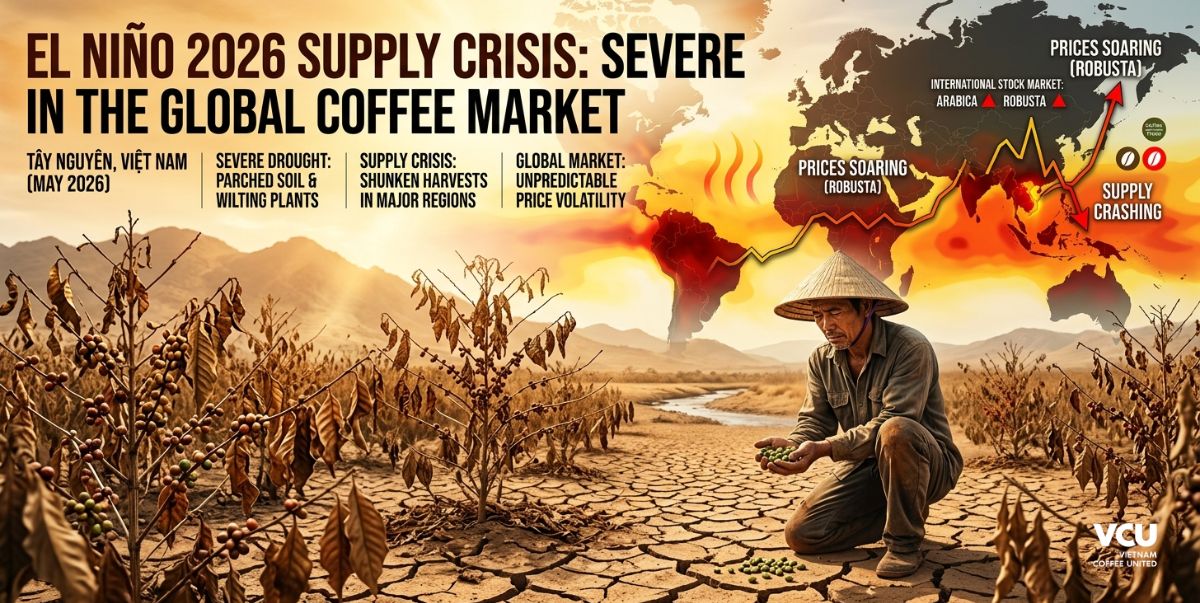
El Niño is characterized by abnormal warming of sea surface temperatures in the equatorial Pacific Ocean. In Vietnam, this climate phenomenon typically impacts the Central Highlands – the region responsible for more than 90% of the country’s coffee production.
Forecasts for 2026 indicate that the region may face several extreme scenarios:
Prolonged severe heatwaves: Average temperatures are expected to rise significantly, with hot air masses arriving earlier than usual seasonal cycles.
Severe rainfall deficits: The risk of depletion in reservoirs, rivers, streams, and groundwater sources is increasing, pushing drought warnings to critical levels.
Heat stress on coffee trees: During the dry season, coffee trees require sufficient water for flowering, fruit setting, and bean development. When temperatures exceed optimal growth thresholds, trees naturally shed immature cherries, while beans become smaller or hollow, severely affecting both yield and bean quality.
If prolonged drought conditions are not mitigated through technical interventions, Vietnam’s Robusta production for the 2026 – 2027 crop year is projected to decline by 15% to 20%. In addition, cultivation costs, electricity expenses, and fuel costs for irrigation systems used to save coffee farms are expected to surge, pushing overall production costs to a new level.
Why is the global coffee market closely monitoring El Niño developments?
History has repeatedly shown that whenever the balance between supply and demand is threatened by extreme weather conditions, the global coffee market reacts with exceptional sensitivity. Not only do futures prices on international exchanges such as London and New York fluctuate dramatically, but the physical coffee market is also undergoing clear strategic shifts.
Amid growing concerns over shortages of standard-grade coffee and potential supply chain disruptions, major roasters and international importers are establishing a new “rulebook” for 2026:
| Strategic Criteria | Previous Market Behavior | Strategic Trend in 2026 |
| Purchasing Plans | Seasonal short-term buying focused on cash flow optimization | Proactively signing contracts 6–9 months in advance |
| Inventory Management | Maintaining minimal safety stock under Just-in-Time models | Increasing strategic inventory reserves in domestic warehouses |
| Supplier Selection | Purchasing through multiple layers of free-market intermediaries | Prioritizing suppliers with transparent and self-controlled supply chains |
This market shift creates tremendous opportunities, but it also acts as a stringent filter. Only companies with truly resilient value chains will be able to meet the increasingly demanding requirements of the market.
VCU – Stabilizing the supply chain through transparency and strict control
As the market searches for solutions to manage the risks caused by El Niño 2026, VCU reinforces its position as a trusted strategic partner for international buyers through strong supply chain control capabilities, strict traceability systems, and an unwavering commitment to product transparency.
Strong input quality control and supply chain monitoring
Recognizing the instability of bean quality and production volumes in the open market under extreme weather conditions, VCU focuses its resources on rigorous quality control systems from the very first stage of raw material procurement.
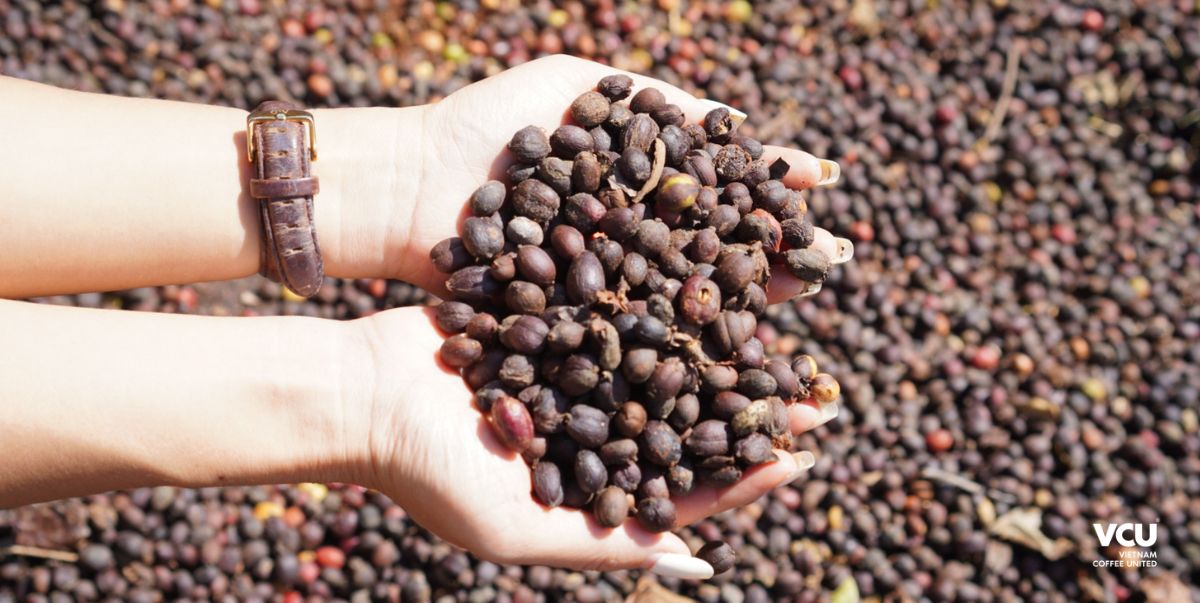
Instead of purchasing large volumes without selection, VCU’s quality inspection process carefully screens every lot, evaluating moisture levels, defect rates, and imperfections caused by heat stress.
The entire process of transportation, storage, and delivery is managed under a closed monitoring system to ensure coffee beans maintain optimal quality and are protected from environmental factors that could negatively affect product consistency.
Clear traceability and product transparency
One of VCU’s core strengths that makes the company a reliable pillar for international importers is its transparency and traceability capabilities:
Comprehensive lot documentation: Every coffee shipment exported by VCU is accompanied by transparent product documentation, including sourcing regions, harvest timelines, and detailed physical analysis specifications.
Modern processing infrastructure for stable product specifications
To address the widespread issue of smaller or hollow beans caused by regional drought conditions, VCU operates modern processing and manufacturing facilities. Through color sorting technology and advanced grading systems, VCU optimizes the quality of every coffee lot.
We are committed to supplying coffee that consistently meets international export specifications, ensuring 100% compliance with the technical standards outlined in long-term contracts with global partners.
Strategic recommendations for global roasters and businesses in 2026
As the coffee industry faces long-term climate challenges and increasingly strict regulatory frameworks, short-term seasonal reactions are no longer effective. To remain resilient during the El Niño 2026 crisis, roasters and importers should immediately implement the following strategic actions:
Prioritize suppliers with proven traceability capabilities
Rather than pursuing low-cost, unverified coffee sources that carry significant legal and reputational risks, businesses should collaborate with transparent suppliers such as VCU to protect their global brand reputation.
Secure long-term supply contracts early
Businesses should proactively stabilize cost structures and secure export volumes through long-term agreements, minimizing exposure to severe physical market price shocks.
Digitize the supply chain
By aligning with responsible consumption trends and standardizing product documentation according to sustainability standards, businesses can better access and retain premium global customer segments.
Conclusion
The challenges posed by El Niño 2026 serve as a harsh natural filter, but they also present a valuable opportunity to redefine the importance of resilient supply chains.
With well-prepared infrastructure, deep expertise in Central Highlands agriculture, and a strong commitment to international standards, VCU is not only a supplier of high-quality coffee, but also a trusted strategic partner that helps global roasters and importers confidently navigate climate-related disruptions while building a more sustainable future for the coffee industry together.
Contact Information
VCU Joint Stock Company (VCU JSC)
– Fanpage: VCU – Vietnam Coffee United