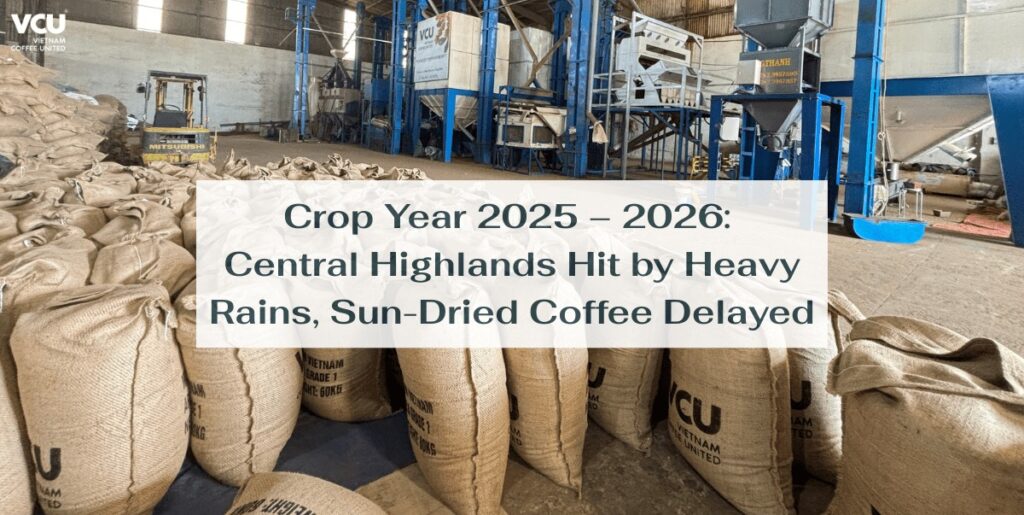
How Do Rising Fuel Prices Affect Coffee Exports? A Perspective from Global Logistics Costs
Fuel prices today, March 9: the global crude oil market surged sharply, officially surpassing the USD 100 per barrel mark, as many analysts had previously predicted.
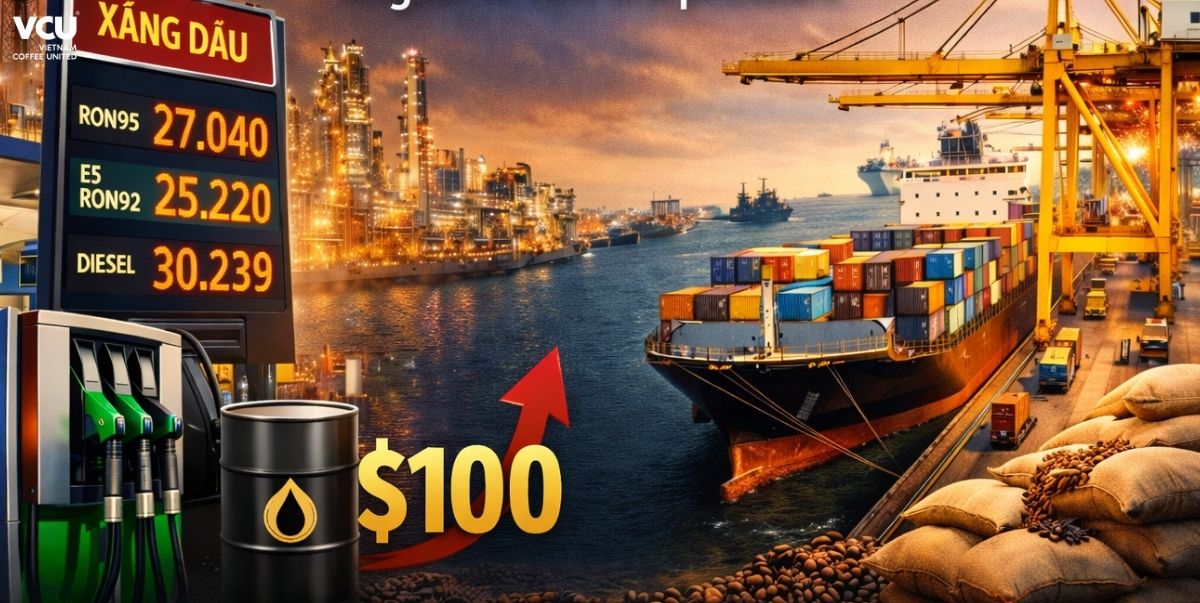
When fuel prices rise, the coffee export industry begins to feel the pressure
In international trade, fuel prices have long been considered one of the most influential factors affecting logistics costs. However, many people still believe that fluctuations in fuel prices only directly impact the energy or transportation sectors. In reality, the situation is quite different.
For agricultural export industries especially coffee every fluctuation in fuel prices quickly spreads throughout the entire supply chain. From domestic transportation costs to ocean freight and container prices, all are directly affected.
In recent weeks, as fuel prices surpassed USD 100 per barrel, the global shipping and logistics market immediately began reacting. Shipping lines adjusted surcharges, freight rates started to change, and export costs began to increase.
For coffee exporting companies, this is an important signal that needs to be closely monitored.
Container vessel fuel costs rise sharply
One of the most direct impacts of rising oil prices is the operating cost of container vessels.
According to estimates from the maritime transport industry, fuel typically accounts for 40 – 60% of a vessel’s total operating costs. When oil prices rise, shipping lines are forced to adjust their charges to compensate.
Common adjustments usually include:
– Fuel surcharge (BAF – Bunker Adjustment Factor)
– Shipping surcharges
– Adjustments to container freight rates on the spot market
Once these surcharges are applied, freight rates often begin to increase within just a few weeks. This is especially evident during periods of strong volatility in the energy market.
For export commodities such as coffee, this means the cost of transporting goods from Vietnamese ports to global consumer markets increases significantly.
Rising fuel prices make export logistics more expensive
The impact of fuel prices does not stop at ocean freight. When energy costs rise, the entire logistics chain is affected.
In practice, the following costs usually increase simultaneously:
– Domestic trucking costs
– Transportation from production regions to ports
– Port operating costs
– Container leasing and handling costs
For the Vietnamese coffee industry, this is an extremely important factor.
Most coffee is grown in highland regions such as the Central Highlands, which are located relatively far from major export ports. Before reaching international buyers, each container of coffee must pass through several transportation stages:
– From farms to collection warehouses
– From warehouses to processing or roasting facilities
– From factories to export ports
– From Vietnamese ports to overseas import ports
The main export ports are usually Ho Chi Minh City or Hai Phong, while major coffee-producing regions such as Gia Lai, Dak Lak, and Lam Dong are located hundreds of kilometers away.
Therefore, when fuel prices rise, domestic logistics costs increase accordingly.
Logistics costs can account for up to 30% of coffee export prices
Under normal conditions, logistics costs typically account for 10 – 20% of the FOB price of green coffee.
However, during periods of strong energy market volatility, this figure can increase significantly.
When international freight rates surge, logistics costs can sometimes reach 25 – 30% of the export price.
To better understand this, consider a practical example:
A container of coffee usually holds about 19 – 20 tons of green coffee beans. When freight rates rise sharply, the transportation cost for that container alone can increase by 20% to 40% compared with normal levels.
This represents a significant expense for export companies.
Coffee exporters face difficult choices
When logistics costs increase, coffee exporters often face one of two options:
Increase the FOB price
This helps offset the higher logistics costs. However, in a highly competitive market, raising prices may cause buyers to switch to other suppliers.
Or reduce profit margins
Some companies choose to keep their selling prices unchanged to maintain customer relationships. However, this means accepting lower profit margins.
In both cases, exporters must make very careful calculations.
Why coffee businesses need early logistics planning
Volatility in the energy market highlights one important fact: logistics is not just about transportation it is a strategic factor in export operations.
To reduce risks when freight rates fluctuate, many coffee companies apply strategies such as:
Early vessel booking
Booking vessel space early helps businesses secure more stable freight rates before the market increases.
Prioritizing FOB contracts
In many cases, exporters prefer FOB contracts to transfer international shipping responsibility to the buyer.
This helps companies better control risks associated with freight rate fluctuations.
Flexible shipment scheduling
Some companies also adjust delivery schedules to avoid periods of high transportation costs.
The connection between energy markets and coffee exports
In an increasingly interconnected global supply chain, energy markets can affect far more industries than we often realize.
For coffee, this relationship is particularly clear. Each coffee bean may travel thousands of kilometers before reaching the consumer from farms in Vietnam to roasting facilities in Europe, the United States, or Asia.
Along that journey, fuel prices plays a critical role in every stage of transportation. When oil prices rise, the cost of each shipment changes as well.
Therefore, understanding the relationship between oil prices, logistics, and coffee exports is becoming increasingly important for all participants in the value chain from farmers, collectors, and roasters to exporters and importers.
Conclusion
Oil prices are not only a story about the energy sector. In global trade, they are a key factor that can directly influence logistics costs and the competitiveness of many export industries, including coffee.
When oil prices rise, ocean freight, domestic transportation, and the entire logistics chain are affected. This significantly increases coffee export costs and forces businesses to develop adaptive strategies.
In an increasingly volatile market environment, closely monitoring energy markets and logistics costs will help coffee companies become more proactive in export planning and risk management.
Because along the journey from farm to the consumer’s coffee cup, fuel prices quietly shape the cost of every shipment.
Source: Analysis and compilation
Read more:
Trusted Sources of Green Coffee Beans in Vietnam
The Impact of Green Coffee Bean Quality on the Final Roast
Contact Information
VCU Joint Stock Company (VCU JSC)
– Fanpage: VCU – Vietnam Coffee United